What Factors Affect My OSAP Estimate?
If you are planning for college or university in Ontario, one of the most important financial tools you will come across is the OSAP estimate. The Ontario Student Assistance Program (OSAP) helps students understand how much funding they may receive for tuition, books, and living expenses. However, many students are surprised when their final OSAP amount is different from the initial estimate.
So, what exactly affects your OSAP estimate? The answer lies in several personal, academic, and financial factors that are assessed during your application. Understanding these can help you plan better and avoid unexpected gaps in funding.
Read More: Can I Receive Grants and Loans at the Same Time?
What is OSAP and How Does the Estimate Work?
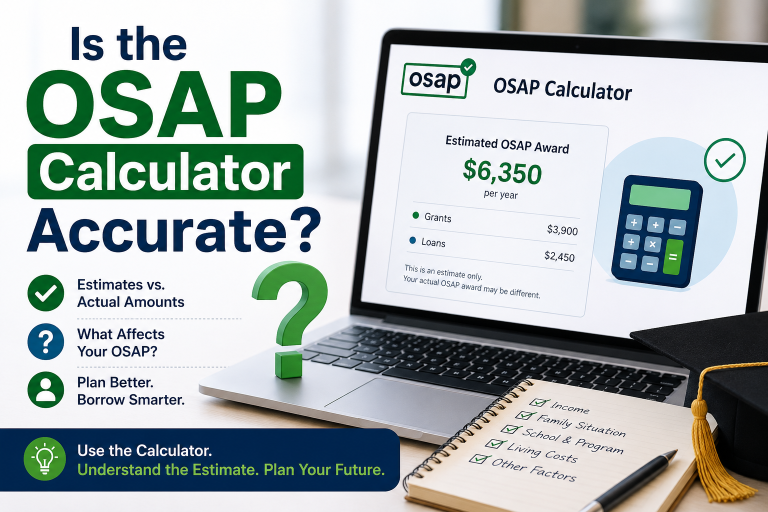
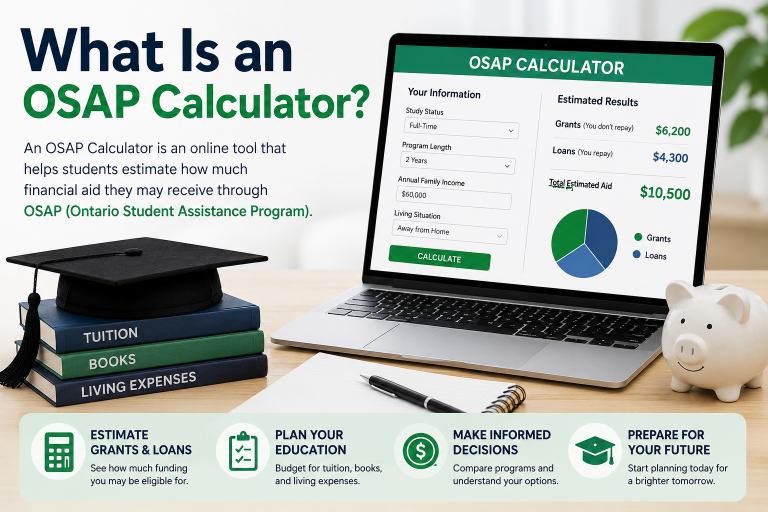
The Ontario Student Assistance Program is a financial aid system designed to help eligible students in Ontario pay for post-secondary education. When you apply, OSAP does not give you a fixed amount immediately. Instead, it generates an estimate based on the information you provide.
This estimate is calculated using a formula that considers your financial need, education costs, and personal circumstances. Since it is based on estimates and not final verified data, the amount can change after your documents are reviewed.
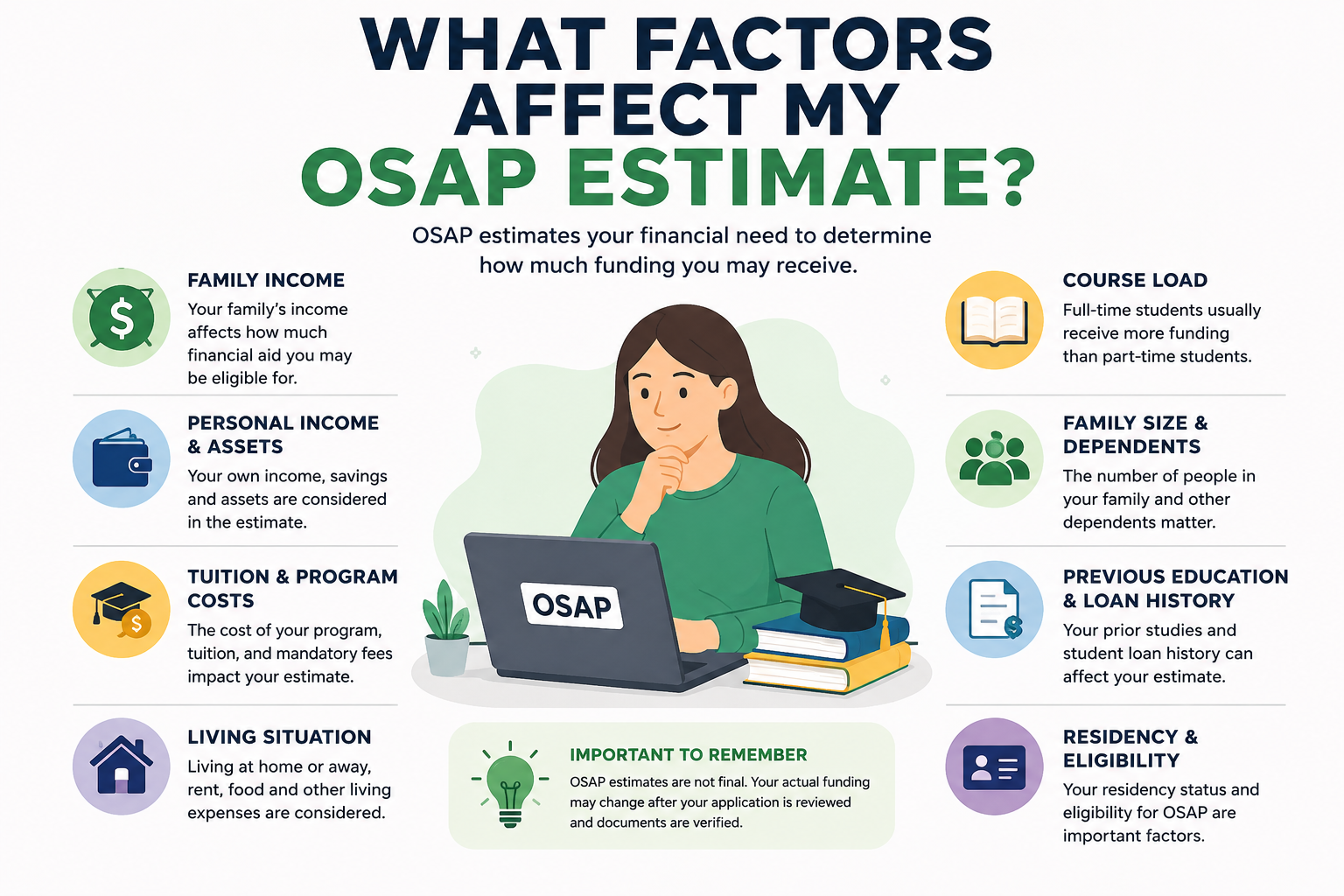
Your Family Income
One of the biggest factors affecting your OSAP estimate is your family income. OSAP evaluates how much financial support you or your family can reasonably contribute toward your education.
- Lower family income usually results in higher OSAP funding
- Higher family income may reduce grant and loan amounts
- Income changes from the previous year can also affect eligibility
If your family’s financial situation changes suddenly, your final OSAP amount may be different from the initial estimate.
Your Personal Income and Assets
Your own income (if you are working part-time or full-time) is also considered in the calculation. Even student earnings can affect your estimate if they exceed certain thresholds.
In addition to income, OSAP may also consider:
- Savings in your bank account
- Investments or assets (in some cases)
- Other financial resources available to you
The idea is to assess your overall ability to contribute to your education costs.
Tuition and Program Costs
The cost of your program plays a major role in your OSAP estimate. Different programs have different tuition fees, and OSAP adjusts funding based on these costs.
- High-cost programs (like engineering or medical-related fields) may receive higher funding
- Lower tuition programs may receive less OSAP support
- Additional fees like books, supplies, and equipment are also considered
If your program cost changes, your OSAP estimate can also change accordingly.
Living Situation
Where and how you live while studying significantly impacts your OSAP calculation.
OSAP considers:
- Living with parents (lower estimated costs)
- Living away from home (higher estimated costs)
- Rent, food, and transportation expenses
Students living independently often receive higher funding because their living expenses are greater.
Course Load (Full-Time vs Part-Time)
Your study load is another important factor.
- Full-time students usually receive more OSAP funding
- Part-time students may receive reduced financial assistance
- Dropping courses after applying can also change your final amount
OSAP assumes a standard academic workload, so any deviation affects the estimate.
Family Size and Dependents
The number of people in your household can also influence your OSAP estimate. If your family has more dependents, the financial burden is considered higher, which may increase your eligibility.
For example:
- Parents supporting multiple children in school
- Single-parent households
- Family members with limited income sources
These situations may positively impact your OSAP funding.
Previous Education and Loan History
Your past education and financial aid history can also play a role.
OSAP may consider:
- Previous student loans and repayment status
- Whether you have completed prior post-secondary education
- Academic progress and program changes
If you already have outstanding loans, it may affect how much additional funding you can receive.
Residency and Eligibility Status
Your eligibility for OSAP depends on your residency status and other requirements. OSAP primarily supports Ontario residents, so your location and status are important.
Factors include:
- Proof of Ontario residency
- Citizenship or immigration status
- Duration of residency in the province
If any of these details change or are not verified, your estimate may be adjusted.
Why OSAP Estimates Can Change
It is important to remember that OSAP estimates are not final approvals. They are based on the information you provide at the time of application.
Once documents are verified, the final amount may change due to:
- Updated income information
- Corrected program costs
- Changes in study status
- Missing or updated documents
This is why students are encouraged to submit accurate and complete information from the start.
Conclusion
Your OSAP estimate is influenced by many interconnected factors, including your income, tuition fees, living arrangements, and study load. Understanding these factors helps you better prepare for your education expenses and avoid financial surprises.
While the estimate gives a helpful starting point, always treat it as a flexible figure. Keeping your information accurate and up to date ensures you receive the most reliable funding assessment possible from the Ontario Student Assistance Program.
If you are planning to apply, reviewing these factors in advance can make the process smoother and help you make smarter financial decisions for your studies.