What Information Do I Need to Use the Calculator?
Calculators are designed to make complex calculations easier, faster, and more accurate. Whether you are using a financial calculator, loan calculator, mortgage calculator, OSAP calculator, tax calculator, or any other online tool, having the right information beforehand is essential. The accuracy of the calculator’s results depends largely on the data you enter. If the information provided is incomplete or incorrect, the final estimate may not reflect your actual situation.
Understanding what information you need before using a calculator can save time and help you get the most accurate results possible. In this guide, we will explain the common types of information required for most calculators and why each detail matters.
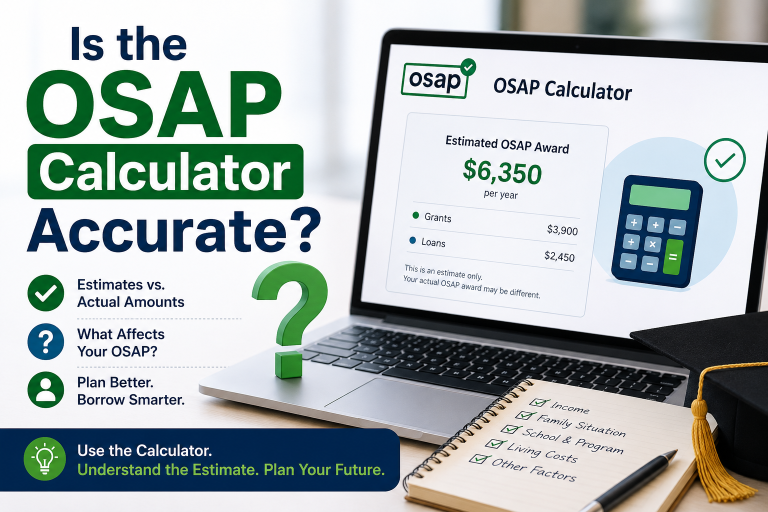
Read More: Is the OSAP Calculator Accurate?
Why Accurate Information Matters
Online calculators are built to process the numbers and details you provide. They use formulas and algorithms to generate estimates, projections, or calculations. However, even the best calculator cannot produce accurate results if the input data is incorrect.
Providing precise information helps:
- Improve calculation accuracy
- Reduce estimation errors
- Save time by avoiding repeated entries
- Support better financial or planning decisions
- Give a clearer understanding of potential outcomes
Before starting, gather all necessary documents or details related to the calculation you want to perform.
Basic Personal Information
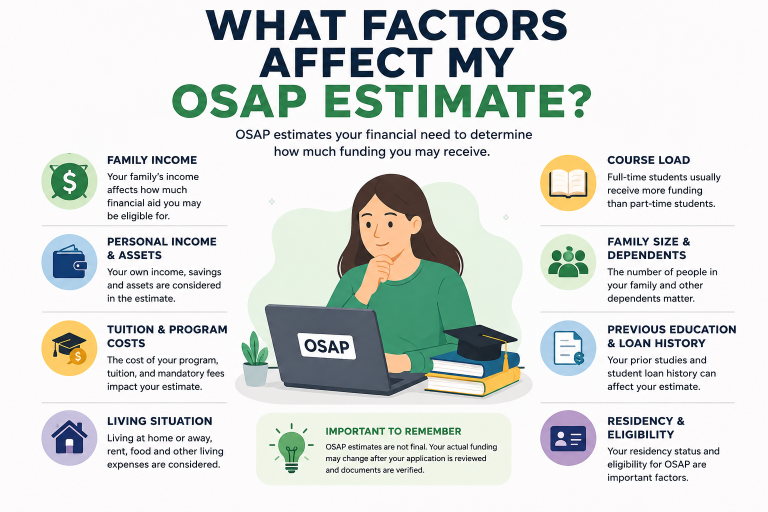
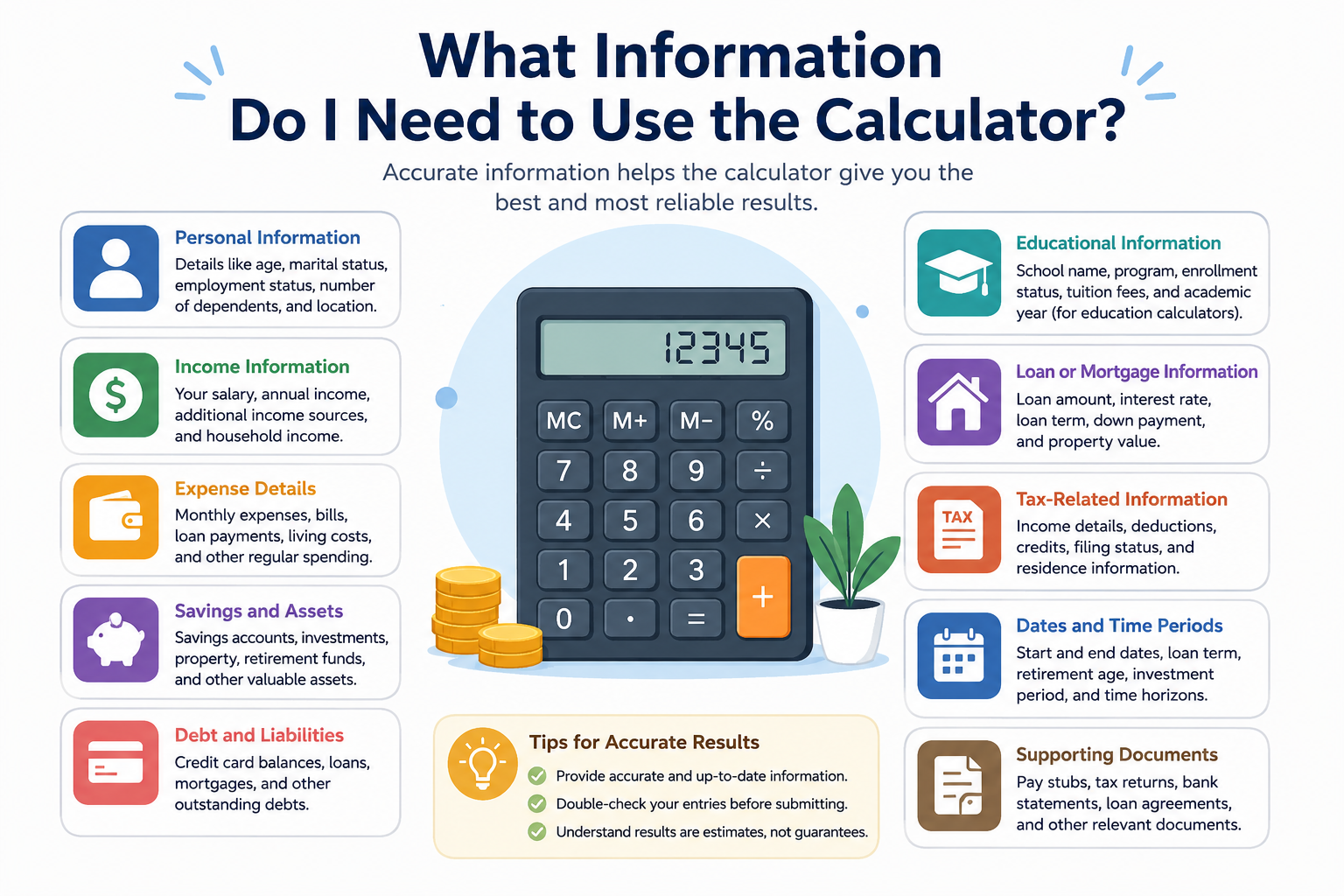
Many calculators require some basic personal details to customize results. Depending on the type of calculator, you may need information such as:
- Age
- Marital status
- Employment status
- Residency or location
- Number of dependents
These details help calculators adjust estimates based on your personal circumstances. For example, tax and education funding calculators often use personal information to determine eligibility or estimate benefits.
Income Information
Income is one of the most common data points required by financial calculators. Your earnings can affect loan approvals, grants, taxes, savings projections, and many other calculations.
You may need to provide:
- Annual income
- Monthly salary
- Self-employment income
- Additional sources of earnings
- Household income
When entering income figures, use current and accurate amounts whenever possible. Estimated income can sometimes lead to inaccurate projections.
Expense Details
Many calculators also ask about expenses to evaluate affordability or financial planning scenarios. Understanding your spending patterns helps generate more realistic results.
Common expense information includes:
- Housing costs
- Utility bills
- Transportation expenses
- Insurance payments
- Loan repayments
- Daily living expenses
Providing accurate expense figures allows the calculator to better assess your financial situation.
Savings and Assets
Some calculators require information about your savings, investments, or assets. These details help estimate your financial position and determine eligibility for certain programs or benefits.
Examples include:
- Savings account balances
- Investment accounts
- Property ownership
- Retirement funds
- Other valuable assets
Including this information helps create a more complete financial picture.
Debt and Liabilities
Debt information is especially important when using loan, mortgage, or financial planning calculators. Existing debts can significantly affect borrowing capacity and future financial projections.
You may need to enter:
- Credit card balances
- Student loans
- Personal loans
- Mortgage balances
- Car loans
Accurate debt figures help calculators provide realistic recommendations and estimates.
Educational Information
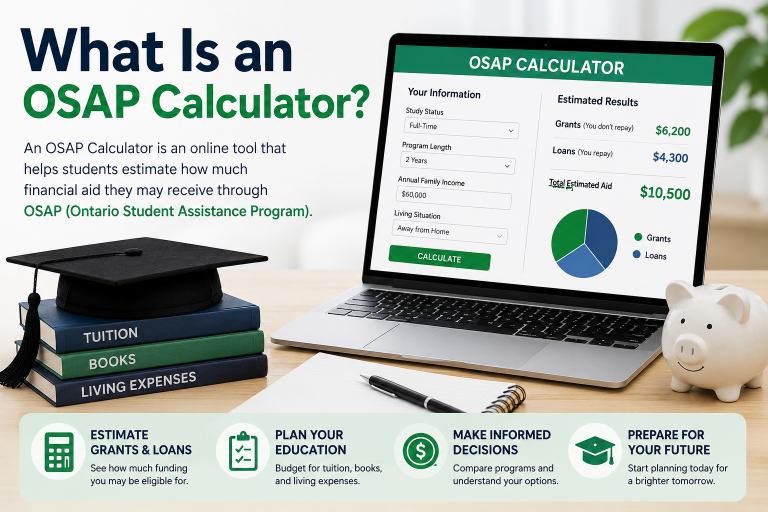
If you are using an education-related calculator such as an OSAP calculator or scholarship estimator, educational details are often required.
Typical information may include:
- School name
- Program type
- Enrollment status
- Academic year
- Tuition costs
- Study location
These factors help determine potential funding, grants, scholarships, or financial assistance amounts.
Loan and Mortgage Information
For loan or mortgage calculators, specific financial details are essential to estimate payments and borrowing costs accurately.
Important information often includes:
- Loan amount
- Interest rate
- Loan term
- Down payment
- Property value
- Payment frequency
The more precise these figures are, the more reliable the calculator’s results will be.
Tax-Related Information
Tax calculators require financial and personal data to estimate tax obligations or refunds. Depending on the calculator, you may need:
- Employment income
- Investment income
- Tax deductions
- Tax credits
- Filing status
- Province or state of residence
Using updated tax information helps ensure more accurate estimates.
Dates and Time Periods
Some calculators rely heavily on dates. Retirement calculators, investment calculators, and loan calculators often use timeframes to make projections.
Examples include:
- Start date
- End date
- Retirement age
- Loan term duration
- Investment period
Entering correct dates ensures the calculator can perform accurate time-based calculations.
Supporting Documents That Can Help
Although not always required, having relevant documents nearby can make the process easier and more accurate.
Useful documents may include:
- Pay stubs
- Tax returns
- Bank statements
- Loan agreements
- Tuition invoices
- Investment records
These documents help verify the information you enter and reduce the risk of mistakes.
Tips for Using Any Calculator Effectively
To get the most reliable results from any calculator, consider the following tips:
- Double-check all entries before submitting.
- Use current financial information whenever possible.
- Read any instructions provided by the calculator.
- Understand that most calculators provide estimates, not guarantees.
- Update information regularly if your circumstances change.
Following these practices can help you make better use of online calculation tools.
Common Mistakes to Avoid
Many users unintentionally enter incorrect information, which can lead to misleading results.
Some common mistakes include:
- Using outdated income figures
- Forgetting additional sources of income
- Underestimating expenses
- Entering incorrect loan terms
- Ignoring existing debts
- Selecting the wrong tax year
Avoiding these errors can significantly improve the accuracy of your calculations.
Conclusion
The information you need to use a calculator depends on the type of calculation you want to perform. In most cases, you will need details related to your income, expenses, savings, debts, personal circumstances, and any specific information relevant to the calculator’s purpose. Taking a few minutes to gather accurate data before you begin can greatly improve the quality of the results.
Whether you are estimating educational funding, calculating taxes, planning a budget, or evaluating a loan, entering complete and accurate information is the key to getting useful and reliable results from any calculator.